
TROJANTRACK: A Movement Analysis Solution
A new approach to equine movement analysis is helping horse owners spot changes earlier, track trends over time, and make more informed decisions alongside their vets and physios.
For many horse owners, there comes a moment when something simply doesn’t feel right. A horse may be moving slightly differently, showing a subtle change in its way of going, or just not seeming quite itself.
The challenge is knowing exactly what has changed — and when.
TrojanTrack is based at the Irish National Stud in Kildare, Ireland and was developed to help answer that question by combining video, artificial intelligence and biomechanics to create an objective record of how an individual horse moves over time.
We interviewed Stephen O'Dwyer, founder & CEO of TrojanTrack about his background in horses, the problem his solution is solving, how the technology works, and what the future of technology in the equine industry will look like.
Early Influences Lead to Equine Technology
“My passion for racing began with my grandfather, a dedicated racing fan who had me at the track from the age of just three,” Stephen recalled.
Although he went on to study biomedical engineering at university, horses remained a constant influence. Many university projects focused on equine issues, including projects involving 3D-printed horseshoes and heart-rate monitors. It was a thesis project, however, that ultimately pointed Stephen toward what would become TrojanTrack.
That combination of engineering, biomechanics and a lifelong connection with horses provided the foundation for developing a technology designed around a very practical question: Is this horse moving differently from how it normally moves?
Building and Testing TrojanTrack
TrojanTrack wasn’t developed overnight.
Throughout 2025, Stephen and his team worked directly with stables to develop and test the product in real-world environments. The company then commercially launched with a small, controlled group of customers toward the end of the year before opening the platform more broadly in January.
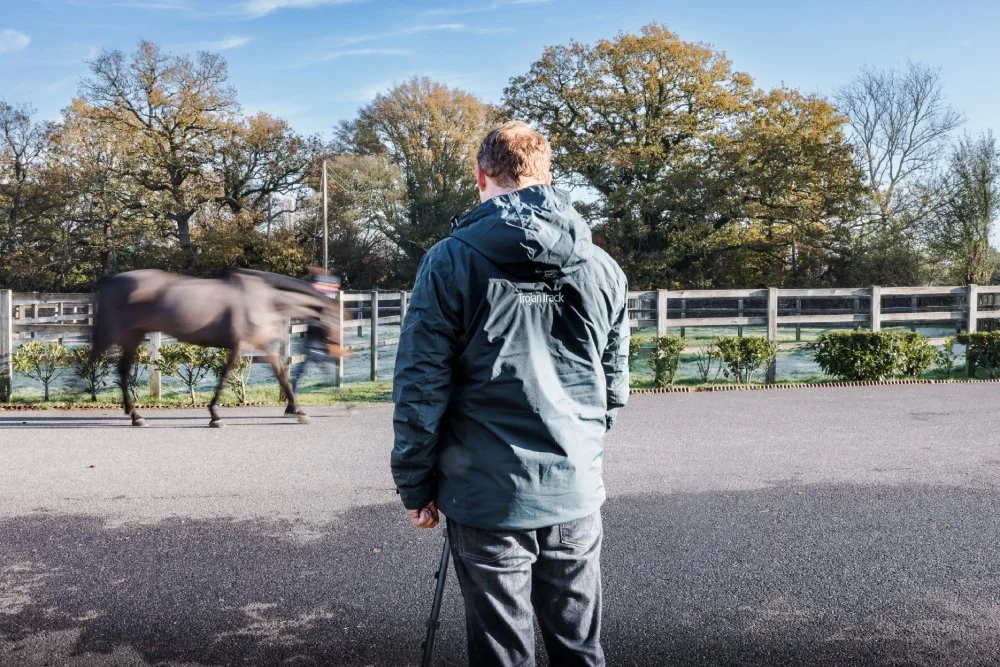
Simply record approximately 10 seconds of the horse walking on a smartphone.
That gradual approach was intentional. “The goal was to make sure the workflow was right before scaling — ensuring the technology was not only scientifically meaningful, but also practical for the people who use it every day,” Stephen said.
“Whether you’re responsible for a stable of 100 horses or have a single horse at home, the fundamental question remains the same: Is my horse moving differently from normal?”
TrojanTrack has been designed and priced so that this question isn’t something only the top end of the sport can afford to investigate.
Making Subtle Changes Easier to See
Anyone who has owned a horse knows the feeling of suspecting that something is slightly wrong without being able to put a finger on exactly what it is. Subtle lameness can be challenging even for professionals. Research published in the Equine Veterinary Journal in 2010 found that, when lameness was subtle, veterinarians agreed on the affected limb only around half of the time.
By the time a movement change becomes obvious, the situation may already have progressed to veterinary costs, a missed competition, or compensatory movement that creates additional problems elsewhere.
TrojanTrack is designed to provide another piece of the puzzle.
“Rather than relying solely on memory or intuition, owners can build a record of how their horse moves when it is considered normal. When movement begins to change, that historical information can provide something objective to discuss with a vet or physiotherapist,” explained Stephen.
How Does TrojanTrack Work?
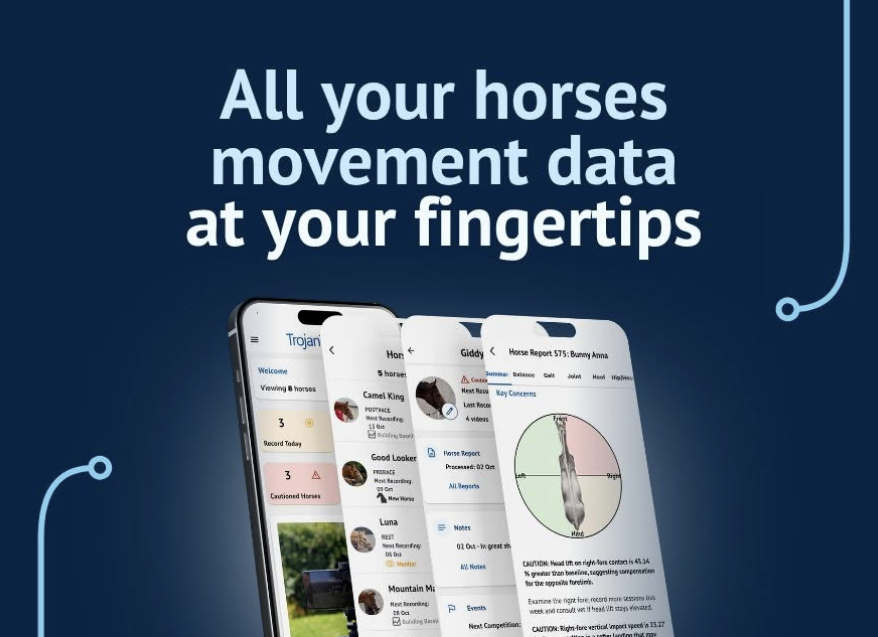
One of the key principles behind TrojanTrack is simplicity. There is no additional hardware required. The user records approximately 10 seconds of video of the horse walking on a smartphone. From that short recording, the system derives 36 biomechanical variables and compares the results against that individual horse’s own baseline.
That last point is particularly important.
“Rather than comparing every horse against a generic definition of “normal,” TrojanTrack establishes a baseline for the individual horse. This makes it possible to monitor changes relative to what is normal for that specific horse.”
Because recording is quick and straightforward, the system is designed for frequent use — potentially three or four times a week. Over time, those individual recordings build into a longitudinal picture. Instead of relying on a single snapshot, owners can start to see how their horse’s movement is trending.
What’s Next for TrojanTrack?
The team is already working on the next stage of the platform.
Stephen shared, “A web portal is in development, designed particularly for people managing multiple horses. Rather than looking at individual records separately, users will be able to sit at a desk and view information about an entire stable in one place.”
Looking further ahead, TrojanTrack is also exploring a conversational interface.
Imagine being able to ask: “How has this horse’s left hind changed over the last six weeks?”
The system could then draw on that horse’s historical movement data and explain the trend.
“The goal isn’t to replace the expertise of a veterinarian or physiotherapist. Instead, it is about making the large amount of longitudinal data being collected genuinely useful and accessible to the people surrounding the horse.”
Where Does AI Fit In?
AI is an important part of TrojanTrack, but perhaps not in the way people might initially expect. The system uses a neural network to track the horse’s movement from video. In Stephen’s words, this is essentially the “eyes” of the system. Once the movement has been tracked, the technology calculates defined biomechanical variables and compares those measurements against the horse’s individual baseline.
The distinction matters.
The system isn’t using a generative AI model to simply look at a video and guess whether something appears wrong. Instead, AI helps accurately measure movement, while biomechanics provides the meaning behind those measurements.
TrojanTrack considers itself first and foremost a movement analysis company. AI helps measure the horse. The biomechanics helps interpret those measurements.
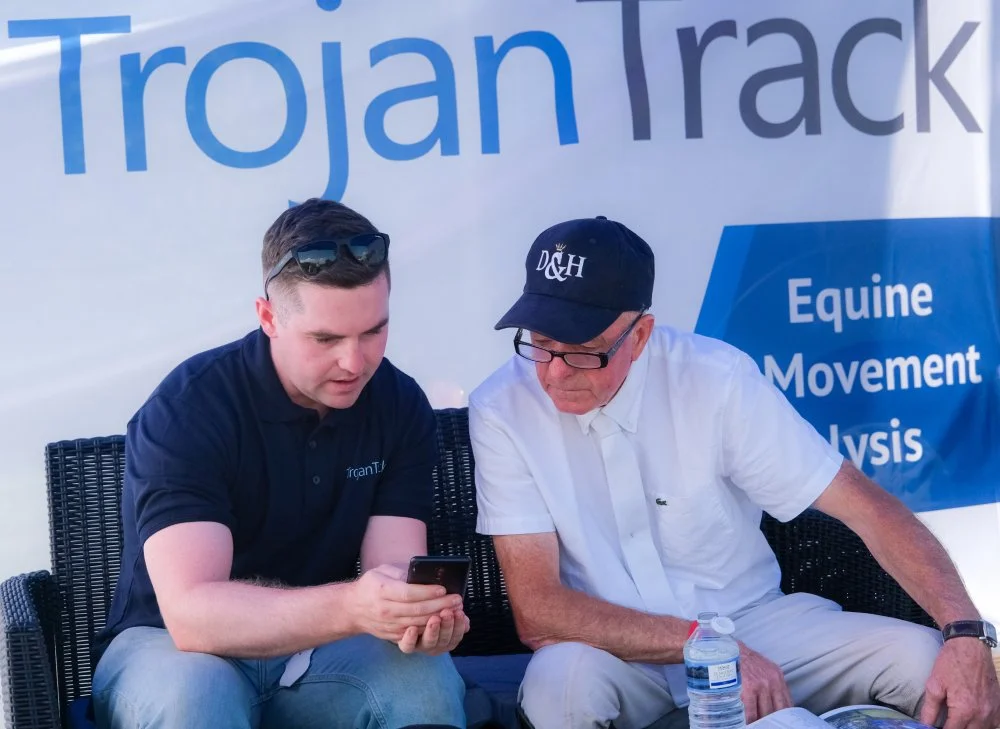
International show jumper, John Whitaker reviewing the benefits of TrojanTrack.
Growing Through Trust, Not Hype
Interestingly, TrojanTrack’s primary marketing channel isn’t a large influencer campaign or traditional advertising. It’s referrals. More specifically, peer-to-peer recommendations.
Some of the company’s strongest growth has come from one person on a livery yard telling the person in the next stable about the technology. That makes sense in an industry where trust matters enormously.
“A recommendation from someone who understands horses, has used the product and has seen the results firsthand can be far more powerful than a polished advertisement,” said Stephen.
What Will Technology Look Like in the Equine Industry Five Years from Now?
Technology should enhance that relationship rather than get in the way of it. As the industry becomes more comfortable distinguishing between where technology is genuinely useful and where it isn’t, the role of objective data is likely to become increasingly important.
Movement analysis is just one example.
Heart-rate monitoring, behavior tracking and stable management are all areas where technology can provide information that has historically been difficult or impractical to measure routinely.
A Data-Driven Future for Horse Care
TrojanTrack represents an interesting intersection between traditional horsemanship, engineering, biomechanics and artificial intelligence. At its heart, however, the concept is remarkably simple: understand what is normal for an individual horse, monitor it consistently, and make changes easier to identify.
Technology won’t replace the experienced eye of a groom, trainer, vet or physiotherapist — nor should it. But when technology can turn something that was previously difficult to measure into objective information, it can give those professionals another valuable tool.
“For TrojanTrack, the future of equine technology isn’t about taking the human element out of horse care. It’s about giving the humans who know and care for horses better information to help them make better decisions.”

Website
Instagram: trojan.track
Facebook: TrojanTrack